
A Beginner Friendly Guide to Understanding Software Stocks and Their Role in Modern Investment Portfolios

and systems. These businesses range from enterprise solution providers and cloud computing giants to cybersecurity firms and consumer app developers. Over the past two decades, software companies have become central to the global economy, powering industries such as finance, healthcare, education, entertainment, and manufacturing. As digital transformation accelerates worldwide, software stocks have increasingly attracted investors seeking growth, innovation, and long-term value.
Why Software Stocks Attract Investors
One of the primary reasons investors favor software stocks is scalability. Unlike traditional manufacturing companies, software firms can distribute their products globally with minimal incremental cost. Once a software platform is built, selling additional licenses or subscriptions often requires little more than server capacity and customer support. This creates high profit margins and strong recurring revenue, especially for companies operating under Software-as-a-Service (SaaS) models.
Recurring revenue is another major attraction. Many software companies use subscription-based pricing, which ensures predictable income streams. Investors appreciate this consistency because it reduces volatility and supports long-term financial planning. Companies like cloud service providers and enterprise software vendors often report steady annual growth driven by subscription renewals and upgrades.
Key Segments Within Software Stocks
Software stocks can be divided into several important categories. Enterprise software companies develop tools for business operations, including accounting systems, customer relationship management (CRM), and human resource platforms. These firms typically secure long-term contracts with corporate clients, ensuring stable revenues.
Cloud computing companies form another major segment. These businesses provide infrastructure, storage, and computing power through the internet. As organizations migrate from on-premise systems to cloud-based environments, demand for cloud software continues to grow rapidly.
Cybersecurity firms also represent a fast-growing area within software stocks. With increasing cyber threats and data breaches, companies and governments invest heavily in digital security solutions. This consistent demand positions cybersecurity providers for long-term expansion.
Additionally, consumer software companies create applications for communication, productivity, gaming, and entertainment. While sometimes more volatile, these companies can achieve rapid growth through innovation and user adoption.
Risks Associated With Software Stocks
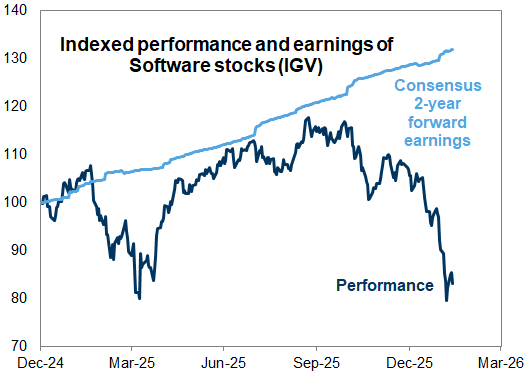
Despite their growth potential, software stocks carry certain risks. Valuation is a common concern. Because many software companies are expected to grow quickly, their stock prices often reflect high future expectations. If a company fails to meet projected growth targets, its stock price can decline sharply.
Competition is another challenge. The software industry evolves rapidly, and new technologies can disrupt established players. Companies must continuously innovate to remain competitive. A failure to adapt to changing market trends, such as artificial intelligence or cloud-native development, can weaken a firm’s market position.
Economic conditions may also impact software stocks. During downturns, businesses might reduce technology spending, affecting revenue growth for some providers.
The Future Outlook of Software Stockssoftware stocks
The long-term outlook for software stocks remains promising. Emerging technologies such as artificial intelligence, machine learning, automation, and blockchain continue to create new opportunities. As more devices connect through the Internet of Things (IoT), the need for advanced software solutions will expand further.
Digital transformation is no longer optional for businesses; it is essential for survival and competitiveness. This structural shift supports sustained demand for innovative software products and services. While short-term fluctuations may occur, the fundamental drivers of growth—technological advancement and global connectivity—remain strong.
In conclusion, software stocks occupy a powerful position in today’s digital economy. With scalable business models, recurring revenues, and expanding technological frontiers, they offer compelling opportunities for investors willing to navigate both the potential rewards and inherent risks of this dynamic sector.