
From Speculation to Insight: Understanding the Mechanics and Impact of Prediction Markets

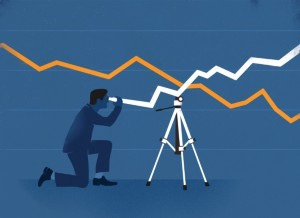
core, they are platforms where people trade contracts based on the outcome of future events, such as elections, economic indicators, technological breakthroughs, or even cultural moments. The prices of these contracts reflect the collective belief about how likely an event is to occur, effectively transforming individual opinions into a shared probability estimate. Over the past few decades, prediction markets have gained attention for their surprising accuracy and their potential to complement or even outperform traditional forecasting methods.
What Prediction Markets Are and How They Work
A prediction market functions similarly to a financial market, but instead of trading stocks or commodities, participants trade outcome-based contracts. For example, a contract might pay one dollar if a specific candidate wins an election and nothing if they lose. If that contract is trading at sixty cents, the market is effectively saying there is a 60 percent chance of that candidate winning. Participants buy contracts when they believe the market underestimates the likelihood of an outcome and sell when they believe it overestimates it. Through this process, new information and differing perspectives are continuously absorbed into the price, making the market dynamic and responsive.
Why Prediction Markets Can Be Surprisingly Accurate
One of the main reasons prediction markets often perform well is their ability to aggregate dispersed information. Each participant brings their own knowledge, intuition, and research into the market, and the incentive structure rewards those who are more accurate. Unlike polls or expert panels, prediction markets do not rely on a single methodology or authority. Instead, they harness competition and financial motivation to filter out noise. When someone has strong evidence or insight, they can act on it immediately, pushing the price in a direction that reflects new information. Over time, this leads to forecasts that can be more resilient to bias and groupthink.
Applications Across Politics, Business, and Science
Prediction markets have been used in a wide range of fields. In politics, they are often cited for their ability to predict election outcomes with impressive precision, sometimes outperforming traditional polling averages. In business, companies have experimented with internal prediction markets to forecast sales figures, project completion dates, or the success of new products. These internal markets allow employees at different levels to share information indirectly, even when they might not feel comfortable voicing dissenting opinions openly. In science and technology, prediction markets have been explored as tools to estimate the likelihood of research breakthroughs or the replication success of published studies.
Ethical, Legal, and Practical Challenges prediction markets
Despite their promise, prediction markets are not without controversy. In some countries, legal restrictions treat them as a form of gambling, limiting their public use or forcing them into regulatory gray areas. Ethical concerns also arise when markets are created around sensitive topics, such as conflicts, disasters, or personal outcomes. There are practical issues as well, including low participation, which can reduce accuracy, and the risk of manipulation if a well-funded actor attempts to move prices for strategic reasons. While markets tend to correct manipulation over time, the risk still raises questions about trust and governance.
The Future of Prediction Markets
As digital platforms evolve and interest in decentralized systems grows, prediction markets are likely to become more visible and more sophisticated. Blockchain-based markets, for example, aim to increase transparency and reduce reliance on centralized authorities. At the same time, researchers continue to study how market design, incentives, and participant diversity affect accuracy. While prediction markets are not a magic solution for uncertainty, they offer a powerful lens through which to view collective expectations. By turning beliefs into prices, they provide a structured way to learn from the crowd and make better-informed decisions in an unpredictable world.